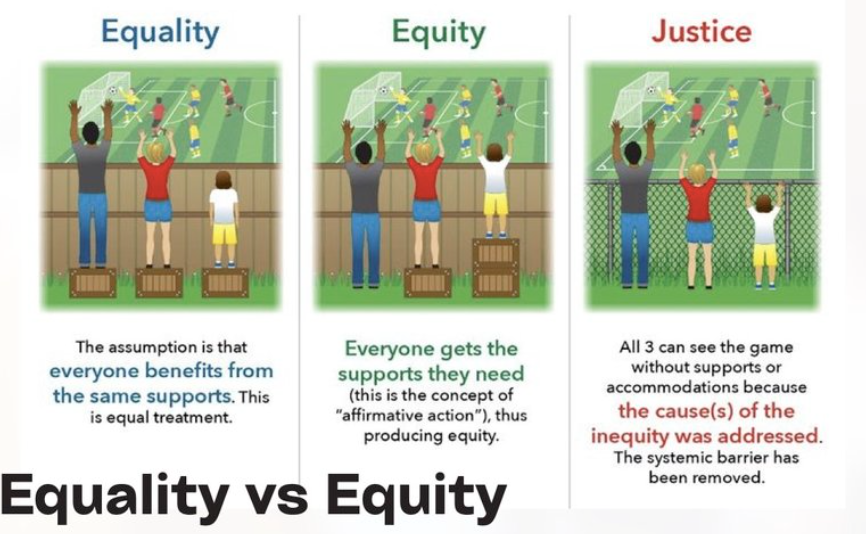
“We’re all familiar, I suspect, with the difference between justice and charity. Charity is giving away some of your time, energy, resources, and person so as to help to others in need. And that’s an admirable virtue, the sign of a good heart. Justice, on the other hand, is less about directly giving something away than it is about looking to change the conditions and systems that put others in need.”1
Here are three short parables on Justice and Charity that can help us think about this difference a bit more.
The Star Thrower
As the story goes, the beach was littered with thousands of starfish struggling to return to the sea. Amid them was a young girl. She picked them up one by one and began tossing them back into the ocean.
A man approached her and said, “Little girl, why are you doing that? There are so many! Certainly you know you can’t save them all. What you are doing will not make a difference.”
The little girl stood up — only for a moment — and wiped her brow, then gazed at the endless ocean before her. She looked left, then right. There were starfish as far as she could see in each direction. She stooped again, picked up another starfish and tossed it back into the ocean. She turned to the man and smiled. “I saved that one!”
The Life-Saving Station
On a dangerous seacoast where shipwrecks often occur there was a once a crude little life-saving station. The building was just a hut, and there was only one boat, but the few devoted members kept a constant watch over the sea, and with no thought for themselves, they went out day or night tirelessly searching for the lost.
Many lives were saved by this wonderful little station, so that it became famous. Some of those who were saved, and various others in the surrounding areas, wanted to become associated with the station and give of their time and money and effort for the support of its work. New boats were bought and new crews were trained. The little life-saving station grew.
Some of the new members of the life-saving station were unhappy that the building was so crude and so poorly equipped. They felt that a more comfortable place should be provided as the first refuge of those saved from the sea.
So they replaced the emergency cots with beds and put better furniture in an enlarged building. Now the life-saving station became a popular gathering place for its members, and they re-decorated it beautifully and furnished it as a sort of club.
Less of the members were now interested in going to sea on life-saving missions, so they hired life boat crews to do this work.
The mission of life-saving was still given lip-service but most were too busy or lacked the necessary commitment to take part in the life-saving activities personally.
About this time a large ship was wrecked off the coast, and the hired crews brought in boat loads of cold, wet, and half-drowned people.
They were dirty and sick, and some of them had black skin, and some spoke a strange language, and the beautiful new club was considerably messed up. So the property committee immediately had a shower house built outside the club where victims of shipwreck could be cleaned up before coming inside.
At the next meeting, there was a split in the club membership. Most of the members wanted to stop the club’s life-saving activities as being unpleasant and a hindrance to the normal life pattern of the club.
But some members insisted that life-saving was their primary purpose and pointed out that they were still called a life-saving station. But they were finally voted down and told that if they wanted to save the life of all the various kinds of people who were shipwrecked in those waters, they could begin their own life-saving station down the coast. They did.
As the years went by, the new station experienced the same changes that had occurred in the old. They evolved into a club and yet another life-saving station was founded.
If you visit the seacoast today you will find a number of exclusive clubs along that shore. Shipwrecks are still frequent in those waters, only now most of the people drown.
Down the River
Once upon a time, there was a town that was built just beyond the bend of a large river. One day some of the children from the town were playing beside the river when they noticed three bodies floating in the water. They ran for help and the townsfolk quickly pulled the bodies out of the river.
One body was dead so they buried it. One was alive, but quite ill, so they put that person into the hospital. The third turned out to be a healthy child, who then they placed with a family who cared for it and who took it to school.
From that day on, every day a number of bodies came floating down the river and, every day, the good people of the town would pull them out and tend to them – taking the sick to hospitals, placing the children with families, and burying those who were dead.
This went on for years; each day brought its quota of bodies, and the townsfolk not only came to expect a number of bodies each day but also worked at developing more elaborate systems for picking them out of the river and tending to them. Some of the townsfolk became quite generous in tending to these bodies and a few extraordinary ones even gave up their jobs so that they could tend to this concern full-time. And the town itself felt a certain healthy pride in its generosity.
- Fr. Ron Rolheiser ↩︎
However, during all these years and despite all that generosity and effort, nobody thought to go up the river, beyond the bend that hid from their sight what was above them, and find out why, daily, those bodies came floating down the river.
Discussion Questions:
- In “The Star Thrower” parable, the little girl focuses on saving one starfish at a time, while in “Down the River,” no one goes upstream to find the source of the bodies. What do these different approaches suggest about the difference between charity (helping individuals) and justice (addressing root causes)?
2. In “The Life-Saving Station,” the original mission gradually changes as the station becomes more comfortable and exclusive. Have you observed similar shifts in real-world organizations that started with idealistic goals? What factors cause missions to drift from their original purpose?
3. The Life-Saving Station members become increasingly concerned with their own comfort rather than their service to others. How might our own desire for comfort influence our willingness to help others? What sacrifices might justice work require that charity work doesn’t?
4. In “Down the River,” the townspeople never investigate what’s happening upstream. What “upstream” problems exist in our society that we might be addressing only at the “downstream” level?
5. Consider the energy and resources expended in each parable. Which approach seems more sustainable in the long term—the individual acts of charity or addressing root causes? How might both approaches work together to create lasting change?
 STRONG LANGUAGE:
Leave a comment